How to Write a Press Release Email Journalists Actually Open (and Respond To)
October 9, 2019
Before you even start to write a press release email – STOP! Think about how the media is pressed for time. Think of all the emails you receive every day. Your "in" box has become like a Candy Crush time challenge where every email you delete feels like a victory.
Journalists are no different. We make quick decisions to determine if your story idea email is even worthy to read.
Reporters simply scan all the subject lines of the day and cherry-pick which press release is worthy.
How To Write A Great Subject Line for Your Press Release
Take a look at what you are up against. Depending on how the reader has set up their email in-box screen, you only have 10 words to snag them.
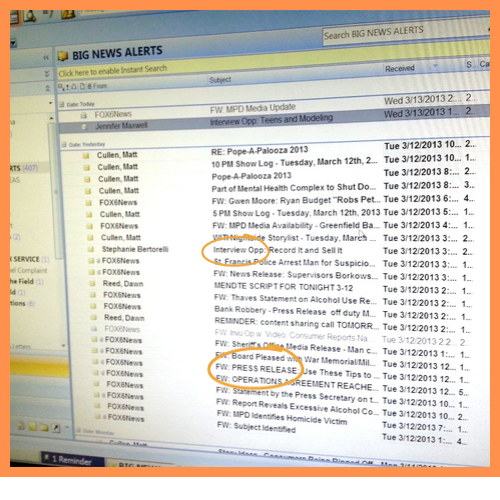
This is why your subject line has to be a "shiny" hook if you want media coverage.
Don't waste those 10 words by using phrases like RE: Interview Opportunity or RE: Press Release.
These headers instantly alert the media, "This is a mass mailing!!!"
Since you didn't care enough to personalize the email, journalists don't feel the need to care about knowing you either. They'll hit DELETE!
Ready to battle back? You must think like a local journalist. Who do they care about? What matters to them?
Create a Winning Subject Line! The One Word You Should Never Forget.
What's the word? See if you can spot it in the examples below. The first subject line was from an email we received from a public relations firm trying to get on our talk show. The second sentence is how I would rewrite this subject line to grab the media's interest.
First Example: Interview Opportunity: Herring Delivery Dec. 13 from Ma Baensch Herring for Good Luck in the New Year

Do you even know what this is about? We didn't. Inside the actual email, the pitch was about fixing holiday drinks using herring. The "delivery" was they wanted to mix up the herring cocktail in-studio.
My rewrite: Let's mix up a NEW & HEALTHY holiday drink recipe. We're LOCAL. You in?
Local television, radio, and newspapers survive on bringing their audience highlights of local companies, events, etc.
The One Word You Must Have in a Press Release Email
If you forget to say you're LOCAL, then you're lost. Your email will be cast away with the national press releases sent to our dark digital trash cans.
You might think, "Well surely they'll know our company name and realize we're local." Unfortunately, there are so many requests and too many new reporters who may not know of your greatness.
Take the time to write a catchy shiny LOCAL subject line and then connect the dots to bring more coverage and customers your way!
If you want to sharpen your message, strengthen your presence, and communicate in a way that earns attention, let's talk.
Book your free discovery call now to set up a confidential consultation.
FAQ: Press Release Emails
What is a press release email?
A press release email is a direct pitch sent to journalists that highlights why your story matters to their audience. It combines a compelling subject line with a concise, personalized message that makes it easy for reporters to evaluate your idea quickly.
Why do most press release emails get ignored?
Because they focus on the sender—not the audience. Journalists are scanning dozens (sometimes hundreds) of emails a day and make fast decisions based on relevance, clarity, and value. If your message doesn't immediately connect to what their audience cares about, it gets deleted.
What makes a strong press release email subject line?
A strong subject line is clear, concise, and relevant. It should quickly signal why the story matters—especially to a local or specific audience—since journalists often decide whether to open an email based on just a few words.
Should you send press releases as attachments?
No. It's more effective to paste your press release directly into the email or link to it online. Attachments can create friction and may be ignored or flagged as risky by journalists.
How important is personalization in a media pitch?
Critical. A personalized email signals that you understand the journalist's beat and audience. Mass emails feel irrelevant—and relevance is the first filter every reporter uses.
What is the biggest mistake people make in press release emails?
They lead with information instead of relevance. The real question is: Why should this journalist—and their audience—care right now? If that's not clear immediately, the message won't land.