Should I Offer My Story as an Exclusive? Media Tips for Business Leaders
October 30, 2019

“Should I offer my story as an exclusive?”
A hotel executive asked me this after listening to my “How to Attract More Free Earned Media” talk for the New Mexico Governor’s Conference on Hospitality and Tourism.
For any organization wanting more media coverage, you need to ask yourself whether you should invite all the media or offer an exclusive. Running the risk of sounding like an attorney, I answered, “It depends.”
5 Questions to Ask Before You Offer An Exclusive Media Story
Before deciding, consider these five questions:
- Who are your target customers?
- Do you know what TV/radio stations your target customers watch or listen to the most?
- Do you have a preferred reporter or someone you might leverage for future opportunities?
- If you invite all stations, how will you structure the news conference?
- Could you schedule individual interviews for each outlet?
Answering these questions will help you determine whether an exclusive story makes sense or if inviting multiple outlets will create more impact.
How to Coordinate a News Conference
No station likes a podium filled with all the other stations’ microphone flag logos. They want the story to look like the interviews are exclusive to their viewers.
Take for example a company called Pixologie – a photo restoration company.
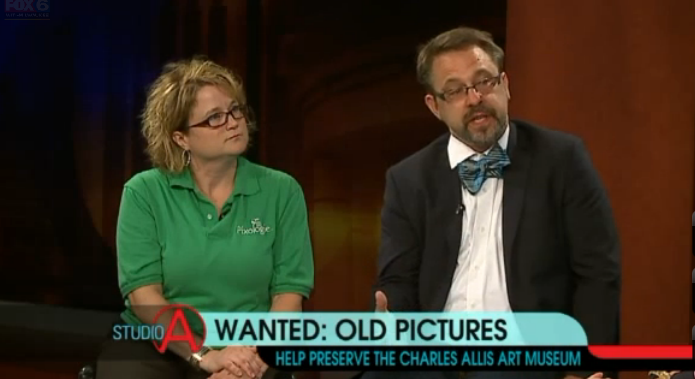
Mollie and Ann from Pixologie were hired by the Charles Allis Art Museum to collect and restore old photos of the Allis Chalmers Manufacturing Company, which had been a huge employer in the Milwaukee area for years.
The museum only had a few photos of what the company used to look like inside. Now they needed to ask the public for help to find more.
Mollie asked me what they should do to get coverage and I said, “You should hold a news conference.”
“Us? We can hold a news conference?” she asked.
“Yes, you can, and bringing all the people together actually makes the job easier for the media,” I replied.
The timing was perfect. Labor Day was the Monday before their big Saturday event when people could come to the museum, bring their old photos of the company, and get them scanned for free.
Labor Day was perfect because the story focused on the history of work done by hundreds of Wisconsinites over the years; the “retirees” was the media “Hook”.
How and Why You Should Pitch Media Ideas for the Holidays!
Plus, since Labor Day is a holiday, Pixologie had two bonuses:
1) Government and business offices are closed; which means the media is more likely to do softer news stories since there is no typical “day-of” news to handle.
2) Newsrooms usually have less staff because people take the day off.
If you provide what journalists call “One Stop Shopping”, where everyone can be interviewed in one place, then you’re more likely to get coverage.
The 3 Best People to Feature at a News Conference
I outlined how Pixologie could attract the media by offering three “key” people at their news conference.
1. The “It’s Personal” person/family
The “It’s Personal” person is the MOST important because a reporter must have someone that has been personally affected by the story in order for them to do a longer and more complete story.
Without the number one person, you’ll see only a quick mention with the authority figure on TV.
As fate would have it, Mollie found a great woman whose parents met at Allis Chalmers. She wouldn’t be alive without the company! This woman happened to come into their offices a couple of weeks before, plus she was willing to talk on camera about it. Thank you, Universe!
2. The Authority Figure
The media needs the authority figure to describe why the event is happening in the first place. The head of the Charles Allis Art Museum was there.
3. The Concerned Person
And lastly, you need someone who represents the community or audience. As concerned photo historians, Mollie and/or Ann had to explain how the photos were going to be handled.
This approach ensures each reporter can capture a compelling angle, increasing the likelihood of meaningful coverage.
They set up three different areas at the news conference for the reporters to rotate and interview each person separately.
In the end, two out of four stations came to the news conference, and the producer of my show at the time booked them for a live interview without me even asking or knowing they had been booked. Good for them!
Deciding whether to offer an exclusive media story is strategic. It requires understanding your audience, your goals, and the media landscape.
With preparation, thoughtful coordination, and the right spokespeople, you can attract coverage that builds credibility, engages your audience, and positions your organization as a trusted source.
Book your free discovery call now to set up a confidential consultation.
FAQ: Exclusive Media Stories
What is an exclusive media story?
An exclusive media story is when you provide one outlet with the first or only opportunity to report on your news. It can create stronger relationships with journalists and a sense of urgency for coverage.
When should I offer an exclusive?
Offer an exclusive if you want to reward a loyal reporter, target a high-priority outlet, or create a unique angle that will generate more attention than multiple outlets covering it at once.
Can exclusives backfire?
Yes. Offering an exclusive limits your reach to other outlets, so it’s important to weigh whether one outlet’s coverage outweighs potential broader visibility.
How do I coordinate multiple media outlets without exclusives?
Schedule interviews carefully, rotate reporters during news conferences, and structure your messaging so every outlet feels their coverage is unique, even if they all attend the same event.